-
×
 ANECDOTES OF THE GREAT
1 × €3.00
ANECDOTES OF THE GREAT
1 × €3.00 -
×
 THE PILGRIM GUIDES
1 × €2.30
THE PILGRIM GUIDES
1 × €2.30 -
×
 HELL AND ITS TORMENTS ST.ROBERT BELLARMI
1 × €3.00
HELL AND ITS TORMENTS ST.ROBERT BELLARMI
1 × €3.00



The College Student Introduction To Trin
€10.00
In stock
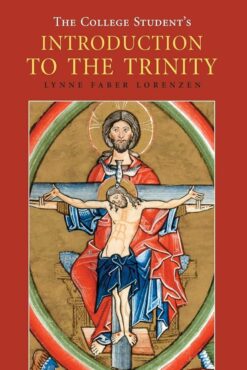
Where did the Holy Trinity originate as a doctrine? Why did this doctrine develop? How can Christians speak of God as three persons and also worship one God? In The College Student’s Introduction to the Trinity, Lynne Lorenzen examines how the doctrine of the Trinity has been interpreted in Eastern Christianity, Western Christianity, and by contemporary theologians including feminists and process theologians.
In Western Christianity the doctrine of the Trinity is an enigma. On the one hand, this doctrine is the foundation of liturgical worship. On the other hand, many Western Christians have focused theology and faith on the person of Jesus to the exclusion of any other theological categories. For these believers the doctrine of the Trinity has become divorced from the doctrine of salvation, soteriology; from the doctrine of the church, ecclesiology; and from how Christians understand what it means for Jesus to be the Christ, christology. For most believers this disjunction is so great as to make them wonder why, aside from tradition, theologians insist on speaking of the Trinity at all. That many theologians have not sensed this need to relate theology to the Trinity also indicates the breadth of the divorce.
In The College Student’s Introduction to the Trinity, Lynne Lorenzen examines the development of the separation of the Trinity from the rest of Christian theology, how it began with Augustine and continued in the Western tradition. One solution that she describes is for the Western Christian to rediscover the original function of the doctrine of the Trinity as integrating soteriology, christology, and the doctrine of God, to develop a doctrine that will reauthenticate the Trinity, and, above all, to integrate these doctrines in a doctrine of the Trinity for the West.
Lorenzen discusses four resources needed for a reauthenticated Western doctrine: orthodoxy, the theology of the pre-Augustinian tradition of the Christian Church that is currently still practiced in the Eastern Orthodox Christian Churches; the work of Jurgen Moltmann and his understanding that the Trinity includes christology and soteriology as foundational; feminism, which understands salvation occurs here and now and is the work of all creation; and process theology, which provides a metaphysics that describes how God relates with the world to bring about salvation. The work concludes by constructing a doctrine of the Trinity out of these resources.
Chapters are The Development of the Doctrine of the Trinity,” “The Western Doctrine of the Trinity,” “Recent Formulations of the Augustinian Tradition,” “Non-Augustinian Formulations in the Western Tradition,” “The Doctrine of the Trinity by Jurgen Moltmann,” “Feminism and the Doctrine of the Trinity,” “Process Theologians and the Trinity,” and “reauthenticated Doctrine of the Trinity.”
Related products